BRN Discussion Ongoing

Appears the MIDI Association liked what BRN were putting out with Akida at CES and how it could assist their industry.
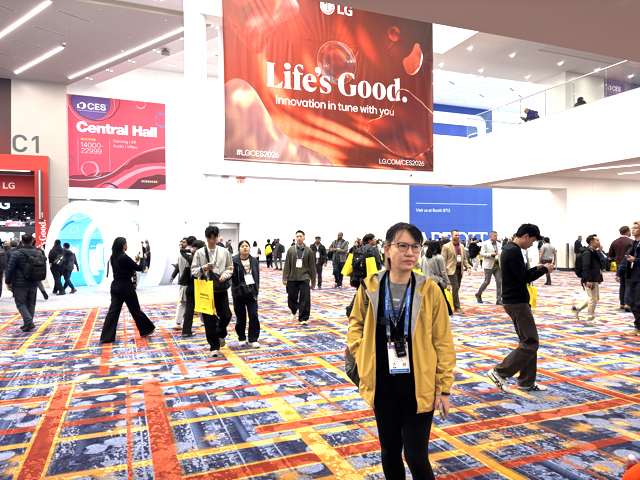


CES 2026 ran January 6–9, 2026 in Las Vegas, and once again the show floor was full of ideas that matter to music creators: new ways to control software, new approaches to wireless “instant play,” and (most importantly) a fast-growing wave of accessibility-first products—Braille, tactile graphics, haptics, smart glasses, and autonomous navigation—built to help more people participate in everyday life.

This CES 2026 roundup is written for the MIDI community with two lenses:

  1. MIDI products and creator tools first—things that can become controllers, instruments, or workflow accelerators.
  2. Accessibility next—especially Braille and touch-based interfaces that can directly influence accessible music-making.


Brain interfaces and on-device AI (BraineuLink + BrainChip)​


BraineuLink describes work on non-invasive EEG brain-computer interfaces for decoding user intentions and interfacing with digital devices, while BrainChip describes its Akida neuromorphic processor platform for low-power, real-time edge AI.
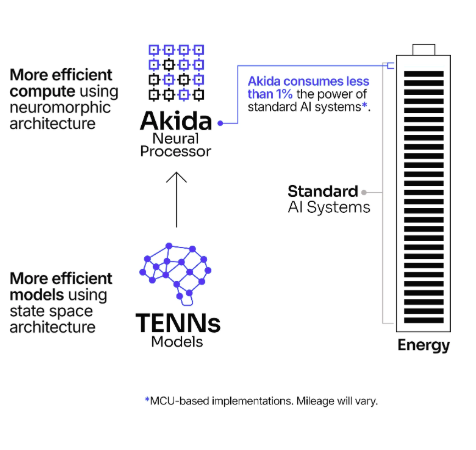
A comparison chart showing Akida Neural Processor and TENNs Models using less energy than standard AI systems, with a note that Akida consumes less than 1% of the power of typical AI systems.

MIDI relevance: these are enabling technologies: lower-power on-device perception and alternate input methods are exactly what’s needed for future accessible instruments, adaptive controllers, and context-aware performance rigs.


The MIDI Association is the global non-profit 501(c)6 trade organization that connects the companies who develop MIDI products and new MIDI specifications with all the people around the world that create music and art with MIDI.

What WE Do​

Our goal is to expand, promote, and protect MIDI technology for the benefit of artists and musicians around the world. The MIDI Association now has over 30,000 individuals who create music and art with MIDI who have registered for our MIDI Messages newsletters.
In April 2020, the United States Library of Congress selected MIDI.org for inclusion in the historic collection of Internet materials related to the Professional Organizations for Performing Arts Web Archive. The www.MIDI.org website is the central repository of information about all aspects of MIDI technology, from classic legacy gear to the next- gen protocols on the horizon.
 
  • Like
  • Fire
  • Love
Reactions: 33 users

manny100

Top 20
Hi All,

Some nice posts coming through, but once again, it's still too early, yes, I know my comment pisses many off, BUT it's the truth!

I know that our company has a lot of work to do throughout 2026, yes, a comment has been mentioned to me that 2027 will "be
the year", with a definite change appearing during the second half of 2026, so hang tight, we have the technology, we have an ever
growing ecosystem, we have a "ever expanding customer register", we have a number of NDA agreements. we have other company's
attention, even Dr. Steve Harbour "liked" our company's photos on Linkedin yesterday, is analog the go, "digital isn't really neuromorphic"
well, I intend asking Peter for a few comments on what was posted by our great poster, Frangipani, lots of respect for her research, her time,
but in the end, I personally trust Peter and his digital creation that we are all hanging our hat on to deliver a worldwide advancement.

Time, we all seem to be controlled by it, but the more you learn about the universe, the ever-expanding universe, the size of which humans
can never, ever understand, it seems that our lifetimes of basically under 100 human years is so minuscule in the overall "plan" of things, why
do we hang so much weight on "time".......maybe we live over and over again through a consciousness that never actually "dies".

Sorry, I have lost myself in thought, but still believe we are all backing a great, future leading company, God bless all.

Cheers......Tech.
Agree, 2027 it is and this is also obvious by the granting of 7,545,307 RSUs to Sean Hehir vesting on 1/3/28.
Sean gets around 2.5 mill RSUs regardless. The rest (around 5 mill RSUs) is tied to targets based on 2027 results which are obviously expected.
The BOD have presented Sean with a pair of golden handcuffs.
 
  • Like
  • Wow
  • Fire
Reactions: 6 users

TECH

Top 20
Agree, 2027 it is and this is also obvious by the granting of 7,545,307 RSUs to Sean Hehir vesting on 1/3/28.
Sean gets around 2.5 mill RSUs regardless. The rest (around 5 mill RSUs) is tied to targets based on 2027 results which are obviously expected.
The BOD have presented Sean with a pair of golden handcuffs.
Hey Manny,

Many are pretty frustrated with what seemed to be promises or company expectations of revenue being generated through IP sales and smaller cash flows from product sales and engineering services, but the uptake hit hurdles along the way, which in all honesty was out of the company's control.

When we entered the scene, all of the bigger engagements already had 5 year roadmaps and budgets of their own, the financial risk to just drop everything and do a U-turn just because we(Brainchip) said so, was never going to happen.

Education has been the major issue, we've been trying to drive forward for a number of years with the handbrake fully up, but as our business model has blossomed with top class staff, ecosystems, meaningful partnerships, more educated clients etc, we are now closer to the other side of that chasm than we have ever been in my view.

Of course there is some guesswork involved, but timelines are evidently a lot clearer than they were 2 years ago, for fence sitters, if you can't see that progress has been made, well I give up trying to convince you.

Akida 3...."You can do it, you can do it all night long" :love::love: Tech ❤️
 
  • Like
  • Fire
  • Thinking
Reactions: 14 users

HopalongPetrovski

I'm Spartacus!
Hey Manny,

Many are pretty frustrated with what seemed to be promises or company expectations of revenue being generated through IP sales and smaller cash flows from product sales and engineering services, but the uptake hit hurdles along the way, which in all honesty was out of the company's control.

When we entered the scene, all of the bigger engagements already had 5 year roadmaps and budgets of their own, the financial risk to just drop everything and do a U-turn just because we(Brainchip) said so, was never going to happen.

Education has been the major issue, we've been trying to drive forward for a number of years with the handbrake fully up, but as our business model has blossomed with top class staff, ecosystems, meaningful partnerships, more educated clients etc, we are now closer to the other side of that chasm than we have ever been in my view.

Of course there is some guesswork involved, but timelines are evidently a lot clearer than they were 2 years ago, for fence sitters, if you can't see that progress has been made, well I give up trying to convince you.

Akida 3...."You can do it, you can do it all night long" :love::love: Tech ❤️
Hi Tech.
I think we have just had to wait for the world to catch up with us.

Peter's vision exceeded the available technology and so he was forced to create it with the help of many collaborators including Anil Mankar.

The wheels of progress grind slowly with vested interests and existing dominant player's wanting to extract full measure from systems and technology's previously invested in.
With the benefit of hindsight It seems many of us jumped in too heavily and too early but I recall the fevered past when I was accumulating all I could, as rapidly as I could, fearing I was already too late.

It's a lesson for many of us exemplified by wise words from the previously prodigious poster here Fact Finder who often exhorted us to
"have a plan".

I am often proved wrong so take this with a mountain of salt and it is certainly not financial advise, but after looking at charts and careful examination of gizzards over the weekend, I recon we are well due for a run up.

How high and for how long and whether it's a trend or merely another blip are all things beyond my ken but we have form around this time of the year.
If it meets my targets I will be cashing some chips in along the way but of course I will retain a significant parcel for the long game.
We each have our individual circumstances to consider.
GLTAH.
 
  • Like
  • Fire
  • Love
Reactions: 27 users

manny100

Top 20
Hey Manny,

Many are pretty frustrated with what seemed to be promises or company expectations of revenue being generated through IP sales and smaller cash flows from product sales and engineering services, but the uptake hit hurdles along the way, which in all honesty was out of the company's control.

When we entered the scene, all of the bigger engagements already had 5 year roadmaps and budgets of their own, the financial risk to just drop everything and do a U-turn just because we(Brainchip) said so, was never going to happen.

Education has been the major issue, we've been trying to drive forward for a number of years with the handbrake fully up, but as our business model has blossomed with top class staff, ecosystems, meaningful partnerships, more educated clients etc, we are now closer to the other side of that chasm than we have ever been in my view.

Of course there is some guesswork involved, but timelines are evidently a lot clearer than they were 2 years ago, for fence sitters, if you can't see that progress has been made, well I give up trying to convince you.

Akida 3...."You can do it, you can do it all night long" :love::love: Tech ❤️
Hi Tech, there are a number of engagements under way. Sean has confirmed he is personally involved with engagements = BRN cannot change horses heading into the final straight = golden handcuffs. It would be crazy to change CEO as some suggest.
Parsons, Onsor, Bascom Hunter, RTX and the now commercial Cybersecurity are all evidence of how close we are getting.
 
  • Like
  • Love
  • Fire
Reactions: 27 users

CHIPS

Regular
I was literally about to post the same thing.

Only posted a couple of hours ago ... who is paying attention ?

View attachment 94204
View attachment 94205

Also paying attention was Aaron Goldberg, SVP at Quantum Ventura - probably because they just spent the last few days together.
But I do like his comment below on the post from a few days ago by Massimiliano.

View attachment 94206

Why do you show this guy from Infineon? I cannot get the connection to the other part of your post.
 

Rach2512

Regular
Would someone with far more technical knowledge than me like to add a comment to this LinkedIn post?

 
  • Like
Reactions: 4 users
Hey Manny,

Many are pretty frustrated with what seemed to be promises or company expectations of revenue being generated through IP sales and smaller cash flows from product sales and engineering services, but the uptake hit hurdles along the way, which in all honesty was out of the company's control.

When we entered the scene, all of the bigger engagements already had 5 year roadmaps and budgets of their own, the financial risk to just drop everything and do a U-turn just because we(Brainchip) said so, was never going to happen.

Education has been the major issue, we've been trying to drive forward for a number of years with the handbrake fully up, but as our business model has blossomed with top class staff, ecosystems, meaningful partnerships, more educated clients etc, we are now closer to the other side of that chasm than we have ever been in my view.

Of course there is some guesswork involved, but timelines are evidently a lot clearer than they were 2 years ago, for fence sitters, if you can't see that progress has been made, well I give up trying to convince you.

Akida 3...."You can do it, you can do it all night long" :love::love: Tech ❤️
I dont u understand Akida 3,
The only way I can is because 1000,1500 ,and 2 are flying ,
But where seeing nothing in regards to revenue yet, In Ces how was 3 recieved?
In saying all this A.I is just beginning so lets see
 

Rach2512

Regular
 
  • Like
  • Fire
  • Love
Reactions: 10 users

Diogenese

Top 20
Would someone with far more technical knowledge than me like to add a comment to this LinkedIn post?

Hi Rach,

Apart from advocating the use of AI to augment human performance, this seems to lack any hard technical bedrock, and reads more as if it is written from the MBA aspect.

The CTO has a software background.

The advisers do not seem strong on technology.
 
  • Like
Reactions: 7 users

JB49

Regular

o Understanding of AI/ML capabilities and use cases, including technical experience with GPGPU and Neuromorphic processors and other leading AI/ML technologies.

And listen to this podcast from AI Tech Systems https://space.n2k.com/podcasts/t-minus/ds130. Much of what’s discussed sounds like a perfect fit for Akida. I assume the BrainChip team may already be in contact with these guys, but if anyone has a connection to Alf Kuchenbuch, it could be worthwhile sharing this podcast along with Ralph’s details, as it seems very much aligned with his work at Frontgrade.
 
Last edited:
  • Like
  • Fire
Reactions: 4 users

Terroni2105

Founding Member
Here’s a job with Onsor, closes 15th Jan.
To oversee the Nexa glasses. Shits getting real Brainers.


https://www.onsor.om/jobs/product-design-engineer-77


Job Description

The Product Design Engineer is the design owner of NEXA Glasses, responsible for the product from early concept through final visualization and future evolution. This role shapes the user experience, usability, visual identity, and product -level functionality of NEXA Glasses, grounded in strong research and continuous improvement.

The Product Design Engineer acts as the long-term design owner of NEXA Glasses, defining how the product looks, feels, functions, and how it evolves across future versions based on research, user feedback, and innovation.


Key Accountabilities & Responsibilities

Research & Concept Development

• Conduct research on existing products, competitors, and comparable medical and wearable devices.

• Identify usability gaps, pain points, and opportunities for improvement.

• Propose new design, usability, and interaction ideas grounded in research findings.

• Translate insights into clear product concepts and design directions aligned with the NEXA design language.


Product Design Ownership & Design Direction

• Own the design of NEXA Glasses from concept definition to final representation.

• Define form direction, ergonomics, and CMF intent.

• Develop a design evolution plan outlining how NEXA Glasses will grow across future versions.


Accessories & Packaging Design

• Design all accessories related to NEXA Glasses.

• Design the product packaging, including structure, layout, and overall user experience.

• Ensure accessories and packaging are visually and experientially aligned with the core product.


Design Refinement & Feasibility Alignment

• Work closely with Industrial Design Engineering after detailed geometry is developed.

• Ensure the final product maintains strong visual quality, usability, and coherence while remaining feasible for hardware integration.

• Review and refine designs to maintain consistency with original product intent.


Cross-Team Collaboration

• Collaborate with the Product Team Lead, Industrial Design Engineering, and Technology teams.

• Support design reviews and contribute design input during concept, DVT, and PVT stages.


Visualization & Communication

• Produce high-quality 3D renders, animations, and videos for NEXA Glasses, its accessories, and packaging.

• Prepare visualization assets for manufacturers, internal reviews, and marketing.

• Ensure all visual outputs accurately reflect the approved product direction.


Design Documentation

• Maintain clear and up-to-date design documentation for NEXA Glasses and its ecosystem.

• Ensure outputs remain aligned with approved product decisions and revisions.
 
  • Like
  • Fire
  • Haha
Reactions: 31 users

Terroni2105

Founding Member
Here’s a job with Onsor, closes 15th Jan.
To oversee the Nexa glasses. Shits getting real Brainers.


https://www.onsor.om/jobs/product-design-engineer-77


Job Description

The Product Design Engineer is the design owner of NEXA Glasses, responsible for the product from early concept through final visualization and future evolution. This role shapes the user experience, usability, visual identity, and product -level functionality of NEXA Glasses, grounded in strong research and continuous improvement.

The Product Design Engineer acts as the long-term design owner of NEXA Glasses, defining how the product looks, feels, functions, and how it evolves across future versions based on research, user feedback, and innovation.


Key Accountabilities & Responsibilities

Research & Concept Development

• Conduct research on existing products, competitors, and comparable medical and wearable devices.

• Identify usability gaps, pain points, and opportunities for improvement.

• Propose new design, usability, and interaction ideas grounded in research findings.

• Translate insights into clear product concepts and design directions aligned with the NEXA design language.


Product Design Ownership & Design Direction

• Own the design of NEXA Glasses from concept definition to final representation.

• Define form direction, ergonomics, and CMF intent.

• Develop a design evolution plan outlining how NEXA Glasses will grow across future versions.


Accessories & Packaging Design

• Design all accessories related to NEXA Glasses.

• Design the product packaging, including structure, layout, and overall user experience.

• Ensure accessories and packaging are visually and experientially aligned with the core product.


Design Refinement & Feasibility Alignment

• Work closely with Industrial Design Engineering after detailed geometry is developed.

• Ensure the final product maintains strong visual quality, usability, and coherence while remaining feasible for hardware integration.

• Review and refine designs to maintain consistency with original product intent.


Cross-Team Collaboration

• Collaborate with the Product Team Lead, Industrial Design Engineering, and Technology teams.

• Support design reviews and contribute design input during concept, DVT, and PVT stages.


Visualization & Communication

• Produce high-quality 3D renders, animations, and videos for NEXA Glasses, its accessories, and packaging.

• Prepare visualization assets for manufacturers, internal reviews, and marketing.

• Ensure all visual outputs accurately reflect the approved product direction.


Design Documentation

• Maintain clear and up-to-date design documentation for NEXA Glasses and its ecosystem.

• Ensure outputs remain aligned with approved product decisions and revisions.
And they’ve got the photo with Sean Hehir with their ad:

1768136485402.jpeg
 
  • Like
  • Fire
  • Love
Reactions: 36 users
Here’s a job with Onsor, closes 15th Jan.
To oversee the Nexa glasses. Shits getting real Brainers.


https://www.onsor.om/jobs/product-design-engineer-77


Job Description

The Product Design Engineer is the design owner of NEXA Glasses, responsible for the product from early concept through final visualization and future evolution. This role shapes the user experience, usability, visual identity, and product -level functionality of NEXA Glasses, grounded in strong research and continuous improvement.

The Product Design Engineer acts as the long-term design owner of NEXA Glasses, defining how the product looks, feels, functions, and how it evolves across future versions based on research, user feedback, and innovation.


Key Accountabilities & Responsibilities

Research & Concept Development

• Conduct research on existing products, competitors, and comparable medical and wearable devices.

• Identify usability gaps, pain points, and opportunities for improvement.

• Propose new design, usability, and interaction ideas grounded in research findings.

• Translate insights into clear product concepts and design directions aligned with the NEXA design language.


Product Design Ownership & Design Direction

• Own the design of NEXA Glasses from concept definition to final representation.

• Define form direction, ergonomics, and CMF intent.

• Develop a design evolution plan outlining how NEXA Glasses will grow across future versions.


Accessories & Packaging Design

• Design all accessories related to NEXA Glasses.

• Design the product packaging, including structure, layout, and overall user experience.

• Ensure accessories and packaging are visually and experientially aligned with the core product.


Design Refinement & Feasibility Alignment

• Work closely with Industrial Design Engineering after detailed geometry is developed.

• Ensure the final product maintains strong visual quality, usability, and coherence while remaining feasible for hardware integration.

• Review and refine designs to maintain consistency with original product intent.


Cross-Team Collaboration

• Collaborate with the Product Team Lead, Industrial Design Engineering, and Technology teams.

• Support design reviews and contribute design input during concept, DVT, and PVT stages.


Visualization & Communication

• Produce high-quality 3D renders, animations, and videos for NEXA Glasses, its accessories, and packaging.

• Prepare visualization assets for manufacturers, internal reviews, and marketing.

• Ensure all visual outputs accurately reflect the approved product direction.


Design Documentation

• Maintain clear and up-to-date design documentation for NEXA Glasses and its ecosystem.

• Ensure outputs remain aligned with approved product decisions and revisions.
Getting real as you say....countdown on too...just saying :)


Definitive Contract​

PIID​

FA875025CB013

In Progress​

(28 days remain)

Unlinked Award

Awarding Agency​

Department of Defense (DOD)

Recipient​

BRAINCHIP, INC

23041 AVENIDA DE LA CARLOTA STE 250

LAGUNA HILLS, CA 92653-1545
UNITED STATES
Congressional District: CA-47
 
  • Like
  • Love
  • Fire
Reactions: 42 users

Guzzi62

Regular
Getting real as you say....countdown on too...just saying :)


Definitive Contract​

PIID​

FA875025CB013

In Progress​

(28 days remain)

Unlinked Award

Awarding Agency​

Department of Defense (DOD)

Recipient​

BRAINCHIP, INC

23041 AVENIDA DE LA CARLOTA STE 250

LAGUNA HILLS, CA 92653-1545
UNITED STATES
Congressional District: CA-47
Nice find!

This is a Firm Fixed Price contract awarded by the Air Force Research Laboratory (AFRL) to BrainChip, Inc., a small business, under the SBIR (Small Business Innovation Research) program. The contract is for the development of a low-power neuromorphic radar classification system that leverages learning algorithms and mapping workflow for RF and radar processing, to be integrated into a small neuromorphic processor. The total ceiling value of the contract is $1,799,348.00, and the period of performance is from December 9, 2024, to February 8, 2026.

Have BRN yet been paid for this contract? Maybe they were paid 1st Dec 2024, I think so.

 
  • Like
Reactions: 8 users

Frangipani

Top 20
Quantum Ventura now has a wholly-owned subsidiary called MetaGuard AI (http://metaguard.ai/) to commercialise CyberNeuroRT. Srini Vasan, President and CEO of Quantum Ventura is also President & CEO of MetaGuard AI.

So it will technically be MetaGuard AI (and not Quantum Ventura as announced on the BrainChip CES 2026 website https://brainchip.com/ces-2026/) showcasing live demonstrations of CyberNeuroRT at BrainChip’s Venetian Tower Exhibit Suite in Las Vegas from January 6-9.


Jan 2, 2026 8:00 AM Eastern Standard Time

MetaGuard AI Debuts Defense-Grade Cybersecurity Platform at CES 2026 with Industry-First Full Source Code Access and BrainChip Neuromorphic Support

Share

Department of Energy (DOE) and Missile Defense Agency (MDA)-Funded AI-driven Cyberthreat management Platform Offers Zeek and Corelight Compatibility with Neuromorphic Edge Computing; Live Demonstrations at BrainChip Venetian Exhibit Suite 29-116, January 6-9; Available via Software Licensing or Managed Services.

SAN JOSE, Calif.--(BUSINESS WIRE)--MetaGuard AI, Inc., a wholly-owned subsidiary of Quantum Ventura Inc., will showcase CyberNeuroRT at the Consumer Electronics Show (CES) 2026, January 6-9 in Las Vegas. Attendees can experience live demonstrations of the Zeek and Corelight-compatible AI-driven real-time security platform.


CyberNeuroRT is the world’s first cybersecurity platform with a full source code licensing option for both enterprise deployments and neuromorphic edge versions, a unique combination in the cybersecurity market.

Developed through U.S. DOE (SBIR Phase 2) and MDA (SBIR Phase 1) federal funding, CyberNeuroRT brings defense-grade AI technology to commercial enterprises through flexible deployment options and unprecedented transparency. During the SBIR program, researchers from Penn State University’s Neuromorphic Computing Lab provided advanced neuromorphic ML models while cybersecurity specialists from the world’s largest Defense contractor provided a technical assessment of a custom CyberNeuroRT version in their air-gapped HPC environment.

"CES 2026 is the perfect venue to demonstrate how our Enterprise-scale ML models are adopted for ultra-efficient threat detection using BrainChip neuromorphic processors and how it transforms cybersecurity," said Srini Vasan, President & CEO at MetaGuard AI. “We invite attendees to visit us and see how CyberNeuroRT delivers in real-time."

"Bringing MetaGuard AI’s threat detection, CyberNeuroRT, solution to the efficient Akida platform shows how neuromorphic computing is reshaping cybersecurity from the edge to the enterprise,” said Sean Hehir, CEO of BrainChip.

CyberNeuroRT serves enterprises requiring AI-powered threat detection with transparency, including existing Zeek and Corelight users, regulated industries needing algorithmic accountability, government contractors, industrial IoT operators, and mid-market companies through managed services or flexible cloud/on-prem licensing models.

CyberNeuroRT Platform Capabilities:
Zeek and Corelight Integration:
Adds multi-model ML inference to existing Zeek and Corelight deployments without infrastructure replacement.

Neuromorphic Optimization: Optimized for BrainChip Akida processors for ultra-low power edge deployment in industrial IoT and distributed environments.

Federal Validation: Competitive SBIR awards from the Department of Energy and Missile Defense Agency validate defense-grade capabilities.

Flexible Licensing: Appointed resellers in the Japanese, Indian, and U.S. regions offer Enterprise Standard, Enterprise Ultra, ML-X Standalone, and around-the-clock Managed-SOC-Services in the U.S., Japan, and Dubai time zones, with other regional market opportunities in development.

Full Source Code Access: The Enterprise Ultra license includes complete source code access, all ML models, training data, and the ML-X platform for building custom threat detection models, providing unprecedented algorithmic accountability for regulated industries.

Transparency Pioneer Program: The first 100 Enterprise Ultra customers receive up to 50% off licensing fees plus priority support. For details, contact inquiries@metaguard.ai. Conditions apply.

MetaGuard AI at CES 2026:
  • Where: Venetian Campus, BrainChip Exhibit Suite 29-116
  • When: January 6, 7, & 9, 2026
  • Demonstrations: 8 a.m. - 2 p.m. PT
  • Schedule meetings:oncehub.com/CNRTatCES or +1 (855) 246-5422
For product information, partnership inquiries, or managed service details, visit www.metaguard.ai or contact them at +1 (855) 246-5422 or inquiries@metaguard.ai.

About MetaGuard AI, Inc.: MetaGuard AI, Inc. is a cybersecurity company commercializing AI-driven threat detection developed with U.S. Department of Energy and Missile Defense Agency SBIR funding, Penn State research, and advisory support from the world’s largest Defense contractor. Its CyberNeuroRT platform offers Zeek and Corelight-compatible network threat detection via software licensing or managed services. For more information, visit www.metaguard.ai.

Contacts​

Media Contact: Aaron Goldberg, SVP, MetaGuard AI, Inc.; Aaron@metaguard.ai, Direct +1 (408) 568-2157


View attachment 93987

View attachment 93988 View attachment 93989 View attachment 93990
View attachment 93992 View attachment 93993 View attachment 93994
View attachment 93991


Quantum Ventura also have an office in Dubai now, where they are know as Quantum Guru (“Pioneering the future of AI, cybersecurity, and advanced technologies from Dubai to the world.”)


View attachment 93995


View attachment 93996


By the way, Lockheed Martin is not named as a partner for the government-funded CyberNeuroRT project, only Penn State is.

Instead, cybersecurity specialists from Lockheed Martin merely had an advisory role, cf. today’s Business Wire article above:

“Developed through U.S. DOE (SBIR Phase 2) and MDA (SBIR Phase 1) federal funding, CyberNeuroRT brings defense-grade AI technology to commercial enterprises through flexible deployment options and unprecedented transparency. During the SBIR program, researchers from Penn State University’s Neuromorphic Computing Lab provided advanced neuromorphic ML models while cybersecurity specialists from the world’s largest Defense contractor provided a technical assessment of a custom CyberNeuroRT version in their air-gapped HPC environment.”

and

“MetaGuard AI, Inc. is a cybersecurity company commercializing AI-driven threat detection developed with U.S. Department of Energy and Missile Defense Agency SBIR funding, Penn State research, and advisory support from the world’s largest Defense contractor.


View attachment 93997

RTX engineers checking out the live demo of MetaGuard AI’s* CyberNeuroRT in BrainChip’s private suite at the Venetian Tower:

*the subsidiary Quantum Ventura set up to commercialise CyberNeuroRT, see https://thestockexchange.com.au/threads/brn-discussion-ongoing.1/post-480130

View attachment 94105

On the left is Senior Principal Software Engineer Sylvia Traxler, who already visited the BrainChip team during CES 2025.

View attachment 94109

As I mentioned in my November post below, she is also one of the Raytheon mentors for the intermural Raytheon Autonomous Vehicle Contest (AVC), whose 2025/26 round BrainChip is sponsoring for the first time.


The gentleman in the middle wearing a white shirt is Samuel Young - he is a Systems Sustainment Engineer at Raytheon/ RTX.


View attachment 94108


3A6E237E-DC67-4CD7-A10F-CC10D267DDC0.jpeg


Abhronil Sengupta, Associate Professor of EECS at Penn State, and his PhD student Malyaban Bal collaborated with Quantum Ventura on CyberNeuroRT and were co-authors of the 2022 paper “Cyber-Neuro RT: Real-time Neuromorphic Cybersecurity”:


ABC67F24-CE1D-4B13-B3B8-3BED3207A3ED.jpeg


Clicking on “Discover our Solution” on the MetaGuard AI website (https://metaguard.ai/) will take you to another website titled “CyberNeuro RT Documentation”:


CyberNeuroRT​

Real-Time AI-Driven Network Detection & Response​

CyberNeuroRT is an advanced Network Detection and Response (NDR) platform designed to provide real-time visibility, AI-powered threat detection, and rapid response across enterprise and multi-tenant environments.

By combining machine learning with neuromorphic spiking neural networks (SNNs), CyberNeuroRT enables security teams to detect known, unknown, and evolving cyber threats with low latency, high accuracy, and scalable performance.

CyberNeuroRT is built for organizations that require continuous network protection without increasing operational complexity.


Why CyberNeuroRT​

Modern cyberattacks are fast, adaptive, and increasingly difficult to detect using signature-based tools alone. Attackers blend into normal traffic, exploit timing gaps, and evade traditional defenses.

CyberNeuroRT addresses these challenges by focusing on behavior, timing, and intent, allowing threats to be detected as they emerge, not after damage occurs.

Key Benefits​

  • Real-time detection of active threats
  • Behavioral analysis beyond static signatures
  • Reduced alert fatigue through high-confidence detections
  • Scalable, multi-tenant architecture
  • Support for automated and analyst-driven response

What CyberNeuroRT Does​

CyberNeuroRT continuously analyzes network traffic and applies multiple AI techniques in parallel to identify malicious behavior and operational risk.

At a high level, the platform: 1. Observes network activity in real time
2. Applies AI-driven behavioral analysis
3. Correlates events across time and protocols
4. Delivers actionable intelligence to analysts
5. Supports rapid containment and response


AI-Powered Threat Detection​

CyberNeuroRT uses a combination of supervised and unsupervised machine learning models together with neuromorphic SNN inference to identify threats that bypass traditional security tools.

Instead of relying solely on signatures, CyberNeuroRT analyzes: - Traffic patterns
- Behavioral deviations
- Temporal correlations
- Communication intent

This approach enables reliable detection even when attackers modify tools, infrastructure, or techniques.


Threats CyberNeuroRT Is Designed to Detect​

CyberNeuroRT’s AI models are trained to recognize a wide range of real-world attack behaviors commonly observed in enterprise networks, including:

  • Ransomware activity
    Indicators such as anomalous encryption behavior, lateral movement, and command-and-control communication.
  • Credential and password-based attacks
    Brute-force attempts, credential misuse, and abnormal authentication patterns.
  • Network scanning and reconnaissance
    Probing behavior that often precedes exploitation and lateral movement.
  • Web application attacks
    Including Cross-Site Scripting (XSS) and injection-based techniques targeting application-layer vulnerabilities.
  • Backdoor and persistent access mechanisms
    Covert communication channels and unauthorized persistence behavior.
  • Denial-of-Service (DoS) and Distributed DoS (DDoS)
    Volumetric and behavioral traffic anomalies intended to disrupt services.
CyberNeuroRT detects these threats using behavioral analysis and AI inference, rather than static rule matching.

Detection capabilities continue to evolve through controlled model retraining and intelligence updates.


Neuromorphic AI for Low-Latency Detection​

CyberNeuroRT integrates neuromorphic spiking neural networks, inspired by biological neural systems, to enable:

  • Ultra-low latency inference
  • Energy-efficient processing
  • Resilient performance under high traffic volumes
This allows CyberNeuroRT to deliver real-time decisions while reducing compute and infrastructure overhead, making it suitable for on-prem, cloud, hybrid, and edge deployments.


Real-Time Visibility & Analyst Experience​

CyberNeuroRT provides a real-time analyst dashboard that enables teams to:

  • Monitor evolving threats continuously
  • Investigate suspicious activity with context
  • Access historical network data for forensic analysis
  • Re-run analysis on stored traffic when required
The interface is designed to reduce investigation time and improve situational awareness.


Automated & Analyst-Controlled Response​

CyberNeuroRT supports both automated remediation and human-in-the-loop response, allowing organizations to balance speed and operational control.

Response actions may include: - Traffic isolation
- Blocking malicious communication paths
- Analyst-approved containment workflows

This approach enables rapid threat containment while minimizing operational risk.


Built for Scale & Multi-Tenant Environments​

CyberNeuroRT is architected for enterprise and service-provider deployments, with strict isolation across tenants.

Key design principles include: - Tenant-level data separation
- Scalable streaming and analytics pipelines
- Predictable performance under high load

This makes CyberNeuroRT suitable for large enterprises, MSSPs, and distributed organizations.


Security & Zero Trust Alignment​

CyberNeuroRT is designed to integrate with Zero Trust architectures and modern security frameworks.

Core security principles include: - Strong authentication and authorization
- Encrypted communication
- Role-based access control
- Least-privilege enforcement

This reduces attack surface and supports secure remote and hybrid access models.


Who CyberNeuroRT Is For​

CyberNeuroRT is ideal for organizations that require high-confidence, real-time network defense, including:

  • Enterprise Security Operations Centers (SOC)
  • Managed Security Service Providers (MSSPs)
  • Critical infrastructure operators
  • Regulated industries
  • Organizations adopting Zero Trust architectures

What’s Next​

If you are new to CyberNeuroRT, the recommended next steps are:

  1. Review the Installation guide to deploy sensors and services
  2. Follow the Usage section to explore detection and dashboards
  3. Refer to API Documentation for integrations and automation
  4. Use Troubleshooting for common operational questions

CyberNeuroRT is designed to grow with your environment — delivering continuous visibility, intelligent detection, and confident response as threats evolve.
 

Attachments

  • F47D6104-2719-4152-817C-5B8E4CB67907.jpeg
    F47D6104-2719-4152-817C-5B8E4CB67907.jpeg
    533.8 KB · Views: 75
  • Like
  • Fire
  • Love
Reactions: 44 users

Quiltman

Regular
Why do you show this guy from Infineon? I cannot get the connection to the other part of your post.

Should have been clearer.
I was simply scrolling through who had "liked" or commented on the LinkedIn post from HaiLa on CES2026.

1768157510606.png
 
  • Like
  • Fire
  • Thinking
Reactions: 10 users

Euks

Regular
  • Like
  • Fire
  • Love
Reactions: 31 users
Getting real as you say....countdown on too...just saying :)


Definitive Contract​

PIID​

FA875025CB013

In Progress​

(28 days remain)

Unlinked Award

Awarding Agency​

Department of Defense (DOD)

Recipient​

BRAINCHIP, INC

23041 AVENIDA DE LA CARLOTA STE 250

LAGUNA HILLS, CA 92653-1545
UNITED STATES
Congressional District: CA-47
I'm not completely sure I'm reading this right but I think it has been modified to end date of 4/8/26.

https://www.usaspending.gov/award/CONT_AWD_FA875025CB013_9700_-NONE-_-NONE-

SC
 
  • Thinking
  • Like
Reactions: 4 users
Top Bottom