It was just satire..I don’t think this is just Sean’s fault. If external IR can only communicate what BrainChip provides internally, then the bottleneck is likely inside the company.
It feels like there’s a communication issue …no one seems clearly responsible for keeping investors updated, so we’re left “in the dark” and forced to dig for information ourselves.
Product development might be progressing, but marketing and communication have been poor for a long time. Even with NDAs, the lack of structured, consistent updates is hard to explain otherwise.

You are using an out of date browser. It may not display this or other websites correctly.
You should upgrade or use an alternative browser.
You should upgrade or use an alternative browser.
BRN Discussion Ongoing
- Thread starter TechGirl
- Start date
It was just satire..
 oh I…..I…ok uhmmm honestly sorry
Pom down under
Top 20
Cool I might get close to a million shares by thenSome details can be under NDA, sure. But the tech and all partners and customers are publicly disclosed. “Top secret” is usually an exaggeration … to excuse the lack of announcements and the worse share price… I am a realist and what I see is, that we will stuck for 2-3 more years between 16-18 cents… happy to be wrong…
Jacob Kiraz
Regular
I feel we are ahead of the game but we had to wait till the industry was ready, I believe the gap is closing,Once it kicks off companies will follow in a mad panic, But the A.I needs to gather momentumFirst time posting on here, but have been observing from the sidelines.
Manny, getting in early, like most on here, hasn’t really played out well.
The opportunity cost, and the effect of inflation on our investments, has left many of us underwater, and breathing through a straw.
I invested In BRN back in 2021, and my average is 30.2 cents, after averaging down a number of times.
I’ve listened to the hype, both here and at the other place, and I’ve come to the conclusion that hot air doesn’t pay the bills.
If we’d waited five years, we could’ve got in way cheaper, and have many more shares. Hard to believe that it’s 17.5 cents, after being told that the technology is a game changer, and years ahead of the opposition.
Anyway, I believe in the technology, but don’t like being treated like a mushroom by the management.
Good luck to all.
Me too!
 yesterday I made the point of no return
Here is also a interesting article from Japan regarding ARM
“
Nvidia partnered with Arm and obtained an intellectual property license to develop the next-generation GPU system “Vera Rubin.” This system was productized as a superchip composed of the “Vera CPU” and the “Rubin GPU” (shown in the photo below).
In developing the Vera CPU, Nvidia licensed “Olympus” from Arm and, based on it, created its own proprietary 88-core CPU (the light-blue chip in the photo below). Rubin functions as the GPU, executing numerical computations at extremely high speed (the two gold-colored chips), while Vera functions as the CPU, handling tasks such as system control. Core software like Linux runs on Vera, which manages and controls the entire system.”
“Nvidia also offers the processor “Jetson Thor” for robots and autonomous driving (shown in the photo below), and here again the CPU portion adopts Arm’s architecture. Jetson Thor is a single-chip System-on-Chip (SoC) design, integrating the GPU “Nvidia Blackwell” and the CPU “Arm Neoverse-V3AE” on one chip. The CPU belongs to Arm’s “Neoverse” family—specifically the high-end “V-Series,” which is used for cloud and AI processors.
Nuro, a company developing autonomous driving technology, built autonomous delivery vehicles using Nvidia’s edge processor (shown in the photo below). It applies robotaxi technology to retail stores, operating them as “supermarkets on wheels.” These vehicles use “NVIDIA DRIVE AGX Thor” as the car’s brain. Arm is responsible for the CPU part of this processor, which runs system control and manages overall operation.
In robotaxis and humanoid robots, AI processors from Nvidia and Qualcomm are being adopted, and product development is advancing with a wide variety of products being released. While GPUs and NPUs—the “engines” of edge processors—attract most of the attention, Arm-based CPUs play a crucial role behind the scenes. GPUs and NPUs are positioned as numerical computation engines within AI systems, whereas CPUs run the base software and control the entire system, coordinating efficient computation. Many edge processors use the Arm architecture, which ensures software compatibility and enables systems to run across different semiconductor platforms. Arm is expanding its business from digital domains such as the cloud into physical domains such as robotics, quietly supporting the AI boom from behind the scenes.”

 etechnologyreview.com
“
Nvidia partnered with Arm and obtained an intellectual property license to develop the next-generation GPU system “Vera Rubin.” This system was productized as a superchip composed of the “Vera CPU” and the “Rubin GPU” (shown in the photo below).
In developing the Vera CPU, Nvidia licensed “Olympus” from Arm and, based on it, created its own proprietary 88-core CPU (the light-blue chip in the photo below). Rubin functions as the GPU, executing numerical computations at extremely high speed (the two gold-colored chips), while Vera functions as the CPU, handling tasks such as system control. Core software like Linux runs on Vera, which manages and controls the entire system.”
“Nvidia also offers the processor “Jetson Thor” for robots and autonomous driving (shown in the photo below), and here again the CPU portion adopts Arm’s architecture. Jetson Thor is a single-chip System-on-Chip (SoC) design, integrating the GPU “Nvidia Blackwell” and the CPU “Arm Neoverse-V3AE” on one chip. The CPU belongs to Arm’s “Neoverse” family—specifically the high-end “V-Series,” which is used for cloud and AI processors.
Nuro, a company developing autonomous driving technology, built autonomous delivery vehicles using Nvidia’s edge processor (shown in the photo below). It applies robotaxi technology to retail stores, operating them as “supermarkets on wheels.” These vehicles use “NVIDIA DRIVE AGX Thor” as the car’s brain. Arm is responsible for the CPU part of this processor, which runs system control and manages overall operation.
In robotaxis and humanoid robots, AI processors from Nvidia and Qualcomm are being adopted, and product development is advancing with a wide variety of products being released. While GPUs and NPUs—the “engines” of edge processors—attract most of the attention, Arm-based CPUs play a crucial role behind the scenes. GPUs and NPUs are positioned as numerical computation engines within AI systems, whereas CPUs run the base software and control the entire system, coordinating efficient computation. Many edge processors use the Arm architecture, which ensures software compatibility and enables systems to run across different semiconductor platforms. Arm is expanding its business from digital domains such as the cloud into physical domains such as robotics, quietly supporting the AI boom from behind the scenes.”
Armは事業戦略を「フィジカルAI」に大転換、AIチップの「CPU」部分を担いロボットの頭脳を構成、ヒューマノイドとロボタクシーの製品開発が急進
Armはプロセッサ開発会社でRISCベースのアーキテクチャを開発している。Armは主要プロセッサで採用され世界…
etechnologyreview.com
Last edited:
And a interesting statement from chatty..Here is also a interesting article from Japan regarding ARM
“
Nvidia partnered with Arm and obtained an intellectual property license to develop the next-generation GPU system “Vera Rubin.” This system was productized as a superchip composed of the “Vera CPU” and the “Rubin GPU” (shown in the photo below).
In developing the Vera CPU, Nvidia licensed “Olympus” from Arm and, based on it, created its own proprietary 88-core CPU (the light-blue chip in the photo below). Rubin functions as the GPU, executing numerical computations at extremely high speed (the two gold-colored chips), while Vera functions as the CPU, handling tasks such as system control. Core software like Linux runs on Vera, which manages and controls the entire system.”
“Nvidia also offers the processor “Jetson Thor” for robots and autonomous driving (shown in the photo below), and here again the CPU portion adopts Arm’s architecture. Jetson Thor is a single-chip System-on-Chip (SoC) design, integrating the GPU “Nvidia Blackwell” and the CPU “Arm Neoverse-V3AE” on one chip. The CPU belongs to Arm’s “Neoverse” family—specifically the high-end “V-Series,” which is used for cloud and AI processors.
Nuro, a company developing autonomous driving technology, built autonomous delivery vehicles using Nvidia’s edge processor (shown in the photo below). It applies robotaxi technology to retail stores, operating them as “supermarkets on wheels.” These vehicles use “NVIDIA DRIVE AGX Thor” as the car’s brain. Arm is responsible for the CPU part of this processor, which runs system control and manages overall operation.
In robotaxis and humanoid robots, AI processors from Nvidia and Qualcomm are being adopted, and product development is advancing with a wide variety of products being released. While GPUs and NPUs—the “engines” of edge processors—attract most of the attention, Arm-based CPUs play a crucial role behind the scenes. GPUs and NPUs are positioned as numerical computation engines within AI systems, whereas CPUs run the base software and control the entire system, coordinating efficient computation. Many edge processors use the Arm architecture, which ensures software compatibility and enables systems to run across different semiconductor platforms. Arm is expanding its business from digital domains such as the cloud into physical domains such as robotics, quietly supporting the AI boom from behind the scenes.”
Armは事業戦略を「フィジカルAI」に大転換、AIチップの「CPU」部分を担いロボットの頭脳を構成、ヒューマノイドとロボタクシーの製品開発が急進
Armはプロセッサ開発会社でRISCベースのアーキテクチャを開発している。Armは主要プロセッサで採用され世界…
“The article basically describes the standard pattern: Arm-based CPU as the control plane (OS, scheduling, I/O) and GPU/NPU as the compute engine. In that kind of architecture, an additional accelerator like Akida could in principle exist — not necessarily inside the superchip, but as a system-level component.
Plausible Akida links to this:
- Edge/Robotics/Auto is more plausible than Datacenter. Jetson/DRIVE runs an Arm CPU side for control/OS and a GPU/NPU side for heavy compute. That’s exactly where a low-power “always-on” co-processor could make sense (pre-filtering, event detection, wake-up triggers, small models), while the big GPU only ramps when needed.
- “Behind the scenes” it wouldn’t be magic — it’s standard integration: PCIe/SPI + drivers/runtime, controlled by the host CPU (often Arm-based).
- BrainChip also isn’t only pushing IP licensing; they’ve communicated plans to bring AKD1500 into volume production, which lowers the barrier for OEMs/Tier-1s to add it as a component rather than designing a full custom ASIC.
And they wouldn’t have to name Brainchip or Akida…

Food4 thought
Regular
Been there for a few years and it’s not as fabulous as one might think when it’s going in the wrong direction.Me too!
We just have to hope that we are somehow on the right track and the right bus

I just hope the bus is facing a really steep hill right now and, as a result, when the driver tries to pull away it rolls back a little because he doesn’t quite nail the brake/clutch/throttle combo. One quick stomp on the gas and then the diesel engine finally comes alive with its torque.Been there for a few years and it’s not as fabulous as one might think when it’s going in the wrong direction.
We just have to hope that we are somehow on the right track and the right bus

AI real time traffic control in Athens
“In a pilot deployment around Athens, Greece, one AI-enabled traffic camera recorded more than 1,000 traffic violations in just four days on busy urban roads. That camera alone flagged drivers for using mobile phones while driving, failing to wear seatbelts, speeding, and other risky behavior. Across just eight cameras operating in the pilot, authorities logged roughly 2,500 violations in that same period.
This system represents the next generation of automated enforcement, going well beyond traditional speed or red-light cameras, and it is part of a broader global trend that raises questions about safety, privacy, and the future of policing on American roads.”

 www.yahoo.com
“In a pilot deployment around Athens, Greece, one AI-enabled traffic camera recorded more than 1,000 traffic violations in just four days on busy urban roads. That camera alone flagged drivers for using mobile phones while driving, failing to wear seatbelts, speeding, and other risky behavior. Across just eight cameras operating in the pilot, authorities logged roughly 2,500 violations in that same period.
This system represents the next generation of automated enforcement, going well beyond traditional speed or red-light cameras, and it is part of a broader global trend that raises questions about safety, privacy, and the future of policing on American roads.”
1,000 Tickets in Four Days: AI Traffic Cameras Are Rolling Out Fast and Drivers Are Getting Caught
For decades, American drivers have fretted about red-light cameras and speed traps. Now a new breed of traffic cop is rolling out worldwide — silent, automated, and powered by artificial intelligence, and it is racking ... Read more
Pom down under
Top 20
I’m still paying off in nearly $2500 in fines for being caught using my mobile while driving not once but twice, just imagine all the shares I could have brought not being so stupidAI real time traffic control in Athens
“In a pilot deployment around Athens, Greece, one AI-enabled traffic camera recorded more than 1,000 traffic violations in just four days on busy urban roads. That camera alone flagged drivers for using mobile phones while driving, failing to wear seatbelts, speeding, and other risky behavior. Across just eight cameras operating in the pilot, authorities logged roughly 2,500 violations in that same period.
This system represents the next generation of automated enforcement, going well beyond traditional speed or red-light cameras, and it is part of a broader global trend that raises questions about safety, privacy, and the future of policing on American roads.”
1,000 Tickets in Four Days: AI Traffic Cameras Are Rolling Out Fast and Drivers Are Getting Caught
For decades, American drivers have fretted about red-light cameras and speed traps. Now a new breed of traffic cop is rolling out worldwide — silent, automated, and powered by artificial intelligence, and it is racking ... Read more
At least you are self reflectedI’m still paying off in nearly $2500 in fines for being caught using my mobile while driving not once but twice, just imagine all the shares I could have brought not being so stupid
 hope you learned your lesson
Pom down under
Top 20
Have one of those phone holders in my car, problem was it was a rental and another persons car I was driving at the time that never had one. How’s ya luckAt least you are self reflected

Have one of those phone holders in my car, problem was it was a rental and another persons car I was driving at the time that never had one. How’s ya luck

Pom down under
Top 20

<h1>Brainchip Akida: A Neuromorphic Processor Already on the Market</h1>
The Akida neuromorphic chip processes information only when it detects a stimulus, mimicking the brain. This event-based architecture enables extreme energy efficiency, ideal for integrating artificial intelligence into battery-powered autonomous devices, such as sensors or wearables.
foro3d.com
Have one of those phone holders in my car, problem was it was a rental and another persons car I was driving at the time that never had one. How’s ya luck
Get Rokid Max 2, you can watch youpom, browse this forum while driving
Nice, and some shareholders still think we're sinking.... dream on, yes it's taking a lot longer than we and the company had envisioned, but to bury one's head in the sand and continue to sulk, well, you certainly would never work at Brainchip with that attitude, knock backs, time delays, design issues, foundry delays, clients indecision, business models changing, geopolitical issues, Covid-19 etc etc etc it is what it is!
BrainChip Akida https://brainchip.com/ip/ | Thomas Hülsing
BrainChip Akida https://brainchip.com/ip/www.linkedin.com
View attachment 94514 View attachment 94515 View attachment 94516
But to deny that we haven't advanced despite all the above hurdles would only indicate one thing, you'd be a complete fool.
Love Akida, our day is coming, just be a little more patient if that suits your personality.
Tech


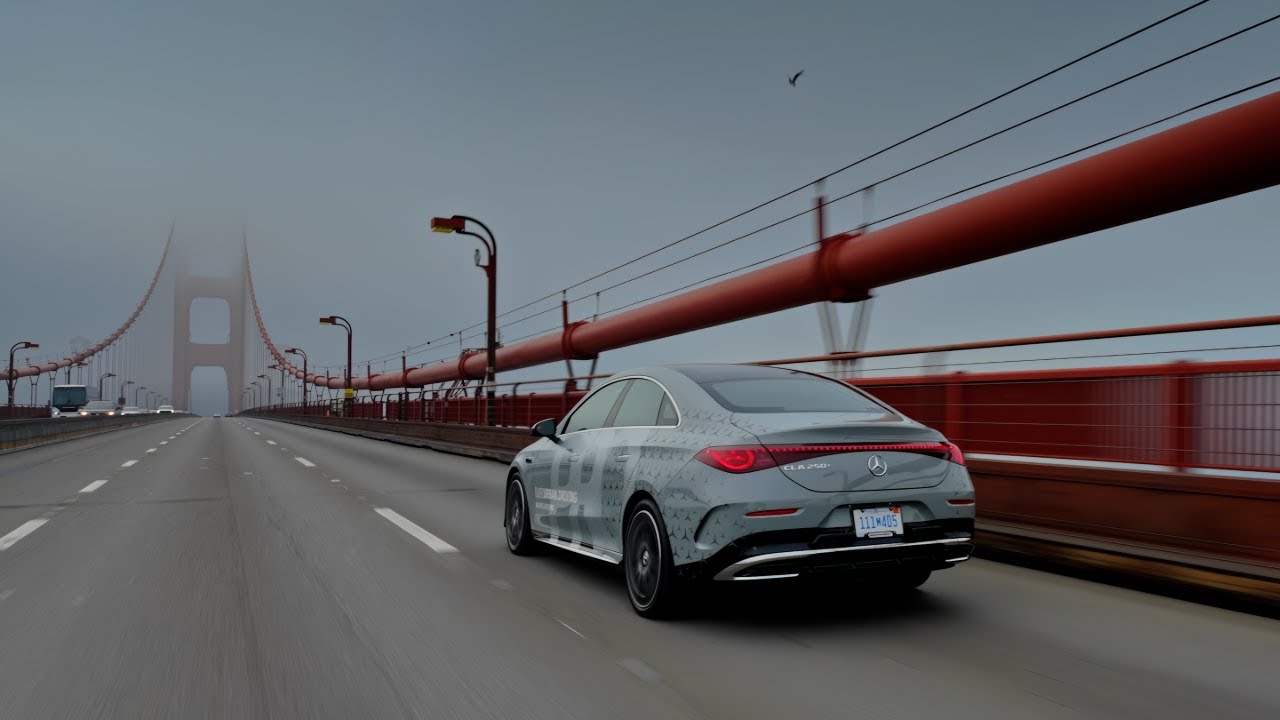
Mercedes-Benz CEO Ola Källenius on the New CLA, Powered by NVIDIA
Ola Källenius, Mercedes-Benz Group CEO, discusses the all-new Mercedes-Benz CLA and its advanced driver-assistance features powered by NVIDIA’s full-stack DR...
 www.linkedin.com

BrainChip & MyWAI Partner to Deliver Next-Gen Edge AI Solutions
This partnership accelerates Edge AI adoption, focusing on manufacturing, logistics, energy management, and healthcare.
 brainchip.com
🌊 𝐍𝐞𝐩𝐭𝐮𝐧𝐞 𝐁𝐞𝐲𝐨𝐧𝐝: 𝐓𝐚𝐤𝐢𝐧𝐠 𝐔𝐧𝐝𝐞𝐫𝐰𝐚𝐭𝐞𝐫 𝐃𝐚𝐭𝐚 𝐀𝐰𝐚𝐫𝐞𝐧𝐞𝐬𝐬 𝐭𝐨 𝐭𝐡𝐞 𝐍𝐞𝐱𝐭 𝐃𝐢𝐦𝐞𝐧𝐬𝐢𝐨𝐧 Proud to share a new milestone for our team and partners. The… | MYWAI
🌊 𝐍𝐞𝐩𝐭𝐮𝐧𝐞 𝐁𝐞𝐲𝐨𝐧𝐝: 𝐓𝐚𝐤𝐢𝐧𝐠 𝐔𝐧𝐝𝐞𝐫𝐰𝐚𝐭𝐞𝐫 𝐃𝐚𝐭𝐚 𝐀𝐰𝐚𝐫𝐞𝐧𝐞𝐬𝐬 𝐭𝐨 𝐭𝐡𝐞 𝐍𝐞𝐱𝐭 𝐃𝐢𝐦𝐞𝐧𝐬𝐢𝐨𝐧 Proud to share a new milestone for our team and partners. The 𝐍𝐞𝐩𝐭𝐮𝐧𝐞 𝐁𝐞𝐲𝐨𝐧𝐝 project has been officially awarded to a consortium led by MYWAI, together with the Italian Welding Institute, Nextvision, and Immersea, under...

Frangipani
Top 20
Here is some info on Dávid Juhász, who has been a Senior Software Engineer with Frontgrade Gaisler since June 2025.
He is one of the 15 co-authors of the Project NEURAVIS paper “Evaluation of Neuromorphic computing technologies for very low power AI/ML applications”(https://thestockexchange.com.au/threads/brn-discussion-ongoing.1/post-475105), which was a collaboration between Airbus Defence & Space Toulouse, Airbus Defence & Space Ottobrunn, BrainChip, Frontgrade Gaisler, Neurobus and ESA.
While said paper is no longer accessible via the link provided in my above September 2025 post (although preserved in the form of screenshots), the EDHPC25 NEURAVIS presentation by co-author Roland Brochard, Computer Vision Expert for Space Systems at Airbus Defence & Space Toulouse, can still be accessed online:
View attachment 94336
Dávid Juhász is also involved in the recently launched VAIAS project (November 2025 - November 2027)alongside his Frontgrade Gaisler colleague Daniel Andersson and their partner team around Rapidity Space CEO Mattias Örth.
The objective of VAIAS is “to validate and commercialize GR801, a neuromorphic AI accelerator designed for onboard autonomy in space missions” (https://esaphilab.se/vaias-project/).

#ai #edgelearning #space #innovation | Charlotte Runberg
Strengthening Sweden’s role as a leading space nation 🛰️- spotlight on the new ESA Phi Lab Sweden AI and edge learning projects and community 🔦👇 Congratulations to all the winning teams — we’re excited to support you as these ideas grow into capabilities that strengthen Sweden in space. 🔦Markus...
View attachment 94330
VAIAS project | ESA Phi-Lab Sweden
esaphilab.se
View attachment 94347
In his LinkedIn profile and on his personal website, Dávid Juhász shares some details about his work with Akida since joining Frontgrade Gaisler in June 2025:

Dávid Juhász - Frontgrade Gaisler | LinkedIn
I build low-power, sustainable edge learning solutions—from firmware and developer tools… · Experience: Frontgrade Gaisler · Education: Technische Universität Wien · Location: Sweden · 500+ connections on LinkedIn. View Dávid Juhász’s profile on LinkedIn, a professional community of 1 billion...
View attachment 94337


Project Portfolio | Dávid Juhász - Edge AI & Embedded Systems Engineer
Explore selected projects by Dávid Juhász, a Edge AI and Embedded Systems Engineer specializing in edge AI, embedded systems, and firmware development. Browse work in low-power solutions, runtime systems, and hardware-software co-design.davidjuhasz.dev
View attachment 94341
View attachment 94343 View attachment 94344
View attachment 94345
View attachment 94346

Excited to represent Frontgrade Gaisler at the NEUTEC workshop next week! 🚀 Neuromorphic technology holds immense promise, but bridging the gap between innovation and deployment requires more than… | Dávid Juhász
Excited to represent Frontgrade Gaisler at the NEUTEC workshop next week! 🚀 Neuromorphic technology holds immense promise, but bridging the gap between innovation and deployment requires more than just breakthroughs—it demands systems thinking, ecosystem collaboration, and a shared roadmap for...
View attachment 94363
#neuromorphiccomputing #edgeai #sustainabletech #futureofcompute | Dávid Juhász
🔮 𝐈𝐭’𝐬 𝐭𝐢𝐦𝐞 𝐭𝐨 𝐝𝐞𝐬𝐭𝐫𝐨𝐲 𝐭𝐡𝐞 “𝐦𝐨𝐫𝐞 𝐢𝐬 𝐦𝐨𝐫𝐞” 𝐦𝐲𝐭𝐡 𝐢𝐧 𝐜𝐨𝐦𝐩𝐮𝐭𝐢𝐧𝐠. This week at the NEUTEC workshop, I explored a question with no easy answers: 𝘏𝘰𝘸 𝘤𝘢𝘯 𝘸𝘦 𝘣𝘳𝘪𝘯𝘨 𝘯𝘦𝘶𝘳𝘰𝘮𝘰𝘳𝘱𝘩𝘪𝘤 𝘵𝘦𝘤𝘩𝘯𝘰𝘭𝘰𝘨𝘪𝘦𝘴 𝘧𝘳𝘰𝘮 𝘱𝘳𝘰𝘮𝘪𝘴𝘦 𝘵𝘰 𝘳𝘦𝘢𝘭-𝘸𝘰𝘳𝘭𝘥 𝘥𝘦𝘱𝘭𝘰𝘺𝘮𝘦𝘯𝘵? Representing Frontgrade Gaisler, I joined experts across academia...
Similar threads


- Replies
- 0
- Views
- 4K
- Replies
- 9
- Views
- 6K
- Replies
- 0
- Views
- 3K