Something I’ve always found very odd is that the job openings listed on the BrainChip website tend to differ from those listed by our company on LinkedIn. Why not post
all open positions in
both places?
There are currently two job openings listed on the BrainChip website, one of which has been up for ages, namely that for “Sales Director US/Bay Area”, which I first spotted almost a year ago, back in early January. (
https://thestockexchange.com.au/threads/brn-discussion-ongoing.1/post-445809).
It has since been reposted several times. However, it appears no suitable candidate has yet been found.
View attachment 93736
A similar job ad was recently posted on LinkedIn, but this time round it was an opening for a “US Sales Manager” in Washington, DC.
Turns out, though, the description is more or less just a copy & paste from the “Sales Director US/Bay Area” job ad, with two marked differences:
“
This position must be located on the East Coast.”
“
Expectation to complete at least two contract/deal within your first year of employment.” (Note that for the “Sales Director US/Bay Area” position it was merely one - whoever did the copy & paste and then made the changes evidently forgot to put “contract/deal” into the plural!)
The job description itself refers to the position being that of a “Sales Manager/Director”, adding “This position is a pivotal member of the sales team, reporting directly to the VP of Global Sales”. That phrase was actually taken verbatim from the “Sales Director US/Bay Area job ad”. Weirdly, it even says under “Market Expansion”: “Develop and implement strategic sales plans to achieve sales targets and expand BrainChip's IP adoption in the US/Bay Area market.”
So is it just sloppy proofreading once again or is this new East Coast-based position actually meant to be a replacement for the yet-to-be-filled role of “Sales Director US/Bay Area” (presently still listed as open on the BrainChip website) rather than an additional sales position lower in hierarchy?
Which in turn would beg the question: Why the sudden shift of focus from Silicon Valley to Washington, DC? Is it the geographical closeness to the seat of the US Government and/or to defense or civilian government contractors in the Beltway (ie Virginia and Maryland) that is so enticing?
Or has our management team made out a new market opportunity represented by specific (other) industries/companies located (primarily) on the East Coast?

Some readers might readily associate “East Coast” and “company” with Boston Dynamics, but as I’ve mentioned before, Boston Dynamics have their own Robotics and AI Institute (
https://rai-inst.com), with plenty of AI experts in their two offices in Cambridge, MA and Zurich, Switzerland. They would know how to reach out for assistance if needed.
Today's top 59 Ski Snowboard Instructor jobs in United States. Leverage your professional network, and get hired. New Ski Snowboard Instructor jobs added daily.

www.linkedin.com
 BrainChip
Washington, DC · Reposted 1 week ago · Over 100 applicants
Promoted by hirer · Actively reviewing applicants
$100K/yr - $175K/yr + Stock, Commission
Remote
Full-time
About the job
The Sales Manager/Director will spearhead the sales initiatives of BrainChip Inc. in the US, focusing on expanding market share, fostering customer relationships, and driving revenue growth. This position is a pivotal member of the sales team, reporting directly to the VP of Business Dev/Sales.
This position must be located on the East Coast.
ESSENTIAL JOB DUTIES AND RESPONSIBILITIES:
- Market Expansion: Develop and implement strategic sales plans to achieve sales targets and expand BrainChip's IP adoption in the US/Bay Area market.
- Customer Relationship Management: Build and maintain strong relationships with key SOC customers, understanding their needs and providing tailored IP solutions.
- Sales Strategy Execution: Drive the execution of sales strategies and initiatives to maximize IP contract revenue and market penetration.
- Lead Generation and Conversion: Identify new business opportunities and manage the entire sales process from lead generation to closing deals.
- Sales Forecasting and Reporting: Provide accurate sales forecasts and reports, analyzing sales data to identify trends and opportunities for improvement.
- Collaboration: Work closely with the marketing, product development, and customer support teams to ensure a cohesive approach to market needs and customer satisfaction.
- Product Knowledge: Maintain a deep understanding of BrainChip's product portfolio and technological advancements to effectively communicate value propositions to customers.
- Competitive Analysis: Monitor and analyze market trends and competitors' activities to adjust strategies accordingly.
- Travel: Domestic travel as required to meet with customers, attend industry events, and participate in training sessions.
- Expectation to complete at least two contract/deal within your first year of employment.
QUALIFICATIONS:
To perform this job successfully, an individual must be able to perform each essential duty effectively and professionally. The requirements listed below are representative of the knowledge, skills, and abilities required. Reasonable accommodations may be made to enable individuals with disabilities to perform the essential functions.
Education/Experience:
- Degree: Bachelor's Degree in Business, Marketing, Engineering, or a related field.
- Experience: Minimum of 7 years of experience in sales within the semiconductor or technology industry, with a proven track record of meeting or exceeding sales targets.
- Technical Knowledge: Familiarity with AI technologies and semiconductor ecosystems is highly desirable.
- Customer Management: Demonstrated ability to manage customer relationships and sales processes effectively.
Other Skills and Abilities:
- Relationship Building: Proven ability to establish and maintain strong relationships with customers and internal teams.
- Sales Acumen: Strong analytical skills to identify market trends, forecast sales, and develop strategic plans.
- Intellectual Property (IP) Sales Process: prior experience managing the sale of IP Licenses, Contracts and Royalty arrangements.
- Communication: Excellent verbal and written communication skills, with the ability to present effectively to diverse audiences.
- Project Management: Experience in managing complex sales projects and coordinating with multiple stakeholders.
- Problem-Solving: Strong problem-solving abilities with a proactive and solution-oriented approach.
- Multitasking: Ability to prioritize and manage multiple tasks efficiently in a fast-paced environment.
Employer-provided
Pay range in Washington, DC
Exact compensation may vary based on skills, experience, and location.
Base salary
$100,000/yr - $175,000/yr
Additional compensation types
Stock, Commission
Also, earlier today, another East Coast-based job got advertised: that of a Field Application Engineer in the Greater Boston Area:
We're #hiring a new Field Application Engineer in Greater Boston. Apply today or share this post with your network.
www.linkedin.com
View attachment 93740
Posted 12:41:56 AM. *This position is a remote position. This person must be located on the East Coast. The Field…See this and similar jobs on LinkedIn.
www.linkedin.com
BrainChip
Greater Boston · 10 hours ago · 11 applicants
Promoted by hirer · Company review time is typically 1 week
$100K/yr - $160K/yr + Bonus, Stock
About the job
*This position is a remote position. This person must be located on the East Coast.
The Field Applications Engineer will be the primary technical interface between BrainChip Sales and Engineering Members and to support current and future customers. This role will be responsible for post-sales evaluations, system design and integrations, and customer troubleshooting. In addition, the Field Applications Engineer will provide end-user facing documentation in the form of application notes, tutorials, and trainings. You must be able to communicate effectively at the engineering level with customers, understand their objectives and needs to develop and articulate solutions to address customers’ requirements.
*Please note: We are not engaging with external recruiting agencies for this role at this time.
About the Role
ESSENTIAL JOB DUTIES AND RESPONSIBILITIES:
- Work with Sales and Engineering members, to support customers and help develop technical solutions for Brainchip’s Akida Neuromorphic System-on-Chip (NSoC).
- Understand customer’s technical requirements & propose solutions and manage projects related to customer activity resolve any customer challenges.
- Be the customer’s trusted advisor and main interface between Customers and BrainChip.
- Ability to understand and present complex technical requirements, problems, and solutions concisely in verbal and written communications.
- Know and understand ASIC and Systems development process and experience Schematics and CAD drawings.
Qualifications
To perform this job successfully, an individual must be able to perform each essential duty satisfactorily. The requirements listed below are representative of the knowledge, skill, and ability required. Reasonable accommodations may be made to enable individuals with disabilities to perform the essential functions.
Education/Experience:
- Bachelor’s degree or Master’s Degree in Computer Science, Electrical Engineering or equivalent.
- Five to ten years of technical pre-sales and / or customer support experience.
- Strong experience with API programming, scripting languages, Linux, Windows Server, and PC/Server drivers.
- Experience with Video Management System (VMS), Video Analytics, APIs from Milestone, Genentec, OnSSI, or others.
- Understanding of Video Codec Technology (VLC, Intel Quick Sync Video).
- Strong experience in at least one application field CPUs, Tools and methodologies and/or machine learning.
- Broad understanding of Machine Learning, Deep Learning, CNN, and Neuromorphic Computing.
- Strong verbal and written communication skills.
- Strong teamwork and interpersonal skills and analytical skills.
- Desire to be involved in a diverse and creative work environment.
- Must be a self-starter with mindset for growth and real passion for continuous learning.
Preferred Skills
- Software QA/Debug experience.
- Board design and development.
- FPGA experience.
- Machine Learning, Artificial Neural Network Programming.
At BrainChip, we hire based on potential, performance, and alignment with our mission to shape the future of intelligent edge computing. We are committed to providing a fair and respectful workplace where individuals are evaluated on their qualifications and contributions. Employment decisions are made without regard to race, color, religion, sex, national origin, age, disability, or any other status protected by applicable law.
We value the diverse perspectives and experiences that help drive innovation in neuromorphic AI and welcome applicants from all backgrounds who share our passion for advancing technology that matters.
Employer-provided
Pay range in Greater Boston
Exact compensation may vary based on skills, experience, and location.
Base salary
$100,000/yr - $160,000/yr
Additional compensation types
Bonus, Stock
Another recent addition is the job opening for “Director of Software Engineering” (“This is a hybrid role, in our Laguna Hills, CA office 2x-3x a week.”), with references to Akida 3.
“We are seeking a seasoned Principal Software Architect with 7+ years of deep systems software experience to own the full developer platform for our 3rd-generation Neural Processing Unit (NPU).”
Today's top 10,000+ Senior Developer Contract jobs in United States. Leverage your professional network, and get hired. New Senior Developer Contract jobs added daily.
www.linkedin.com
BrainChip
https://www.linkedin.com/jobs/view/4341105585/?alternateChannel=search&eBP=NOT_ELIGIBLE_FOR_CHARGING&refId=2TxkwqNA2JUFjT3ZIPm0Kw==&trackingId=/qMfRMNw7yOuGwhThqqZkw==&trk=d_flagship3_search_srp_jobs
Laguna Hills, CA · Reposted 16 hours ago · 85 applicants
Promoted by hirer · Actively reviewing applicants
$100K/yr - $225K/yr + Bonus, Stock
Hybrid
Full-time
About the job
*We are not accepting outside agencies at this time*
BrainChip is pioneering neuromorphic edge AI processors that deliver ultra-low-power intelligence at the point of data creation. We are seeking a seasoned Principal Software Architect with 7+ years of deep systems software experience to own the full developer platform for our 3rd-generation Neural Processing Unit (NPU).
Reporting directly to the CTO and partnering closely with our internal compiler lead, you will architect, integrate, and deliver a production-grade software ecosystem—including a VS Code-based IDE with embedded LLM assistance, system-level profiling, target-side bootloader, RTOS integration, and advanced debugging—all built atop mature open-source foundations and our in-house compiler.
Your mission: assemble together a seamless, best-in-class developer experience that hides complexity and accelerates adoption of BrainChip’s unique neuromorphic hardware.
This is a hybrid role, in our Laguna Hills, CA office 2x-3x a week.
Key Responsibilities
1.Developer Platform Architecture & Integration
- Own end-to-end integration of our internal compiler into a unified toolchain with runtime, IDE, debugger, profiler, and deployment pipeline.
2.VS Code IDE with LLM-Powered Developer Assistance
3. System-Level Profiling & Performance Observability
4. Target-Side Bootloader & RTOS Integration
- Architect a secure, minimal target bootloader supporting:
5. Debugging & Hardware-in-the-Loop Workflow
- Extend GDB/LLDB with NPU-specific commands for cycle-accurate stepping, event tracing, and state inspection (membranes, synapses, queues).
- Support JTAG, SWD, and OTA debug with non-intrusive hardware tracing.
6. Hardware-Software Co-Design Feedback Loop
- Work hand-in-hand with the CTO and silicon team to expose hardware capabilities via software abstractions.
- Use profiling and simulation data to influence microarchitecture (e.g., memory tiling, sparsity engines, event routing).
Qualifications
- Education: BS in Computer Engineering, Computer Science, Electrical Engineering, or equivalent.
Experience:
- 7+ years in systems software; 3+ years integrating and productizing complex toolchains (compilers, IDEs, debuggers, profilers).
- Proven success shipping VS Code extensions or full developer platforms used by external teams desired.
- Deep experience with open-source integration and upstream contribution workflows.
- Technical Expertise in many of the following:
– IDE & Tooling: VS Code Extension API, LSP, DAP, TypeScript, WebAssembly UI.
– Debug & Profiling: GDB/LLDB extensions, OpenOCD, eBPF, perf, hardware trace
(ETM/HTM).
– RTOS & Embedded: Zephyr/FreeRTOS, device trees, linker scripts, bare-metal bring-up.
– Build & Packaging: CMake, Ninja, Yocto, Debian packaging, CI/CD.
– Languages: Expert in C/C++, Rust; strong in Python, TypeScript.
– Compiler Integration: LLVM/MLIR tooling, plugin architecture, pass management
- Domain Fit: Experience with edge AI, neuromorphic, or ultra-low-power SoCs strongly preferred and/or intense curiosity and interest.
Preferred Qualifications:
- Upstream contributions to VS Code, LLVM, Zephyr, OpenOCD, or other large opensource projects.
- Experience with LLM integration in IDEs (Copilot, CodeLlama, custom fine-tuned models).
- Secure boot and firmware update systems in production devices.
- Patents or publications in developer tools, profiling, or edge AI deployment.
- Strong Background in robotics and embedded system
Employer-provided
Pay range in Laguna Hills, CA
Exact compensation may vary based on skills, experience, and location.
Base salary
$100,000/yr - $225,000/yr
Additional compensation types
Bonus, Stock







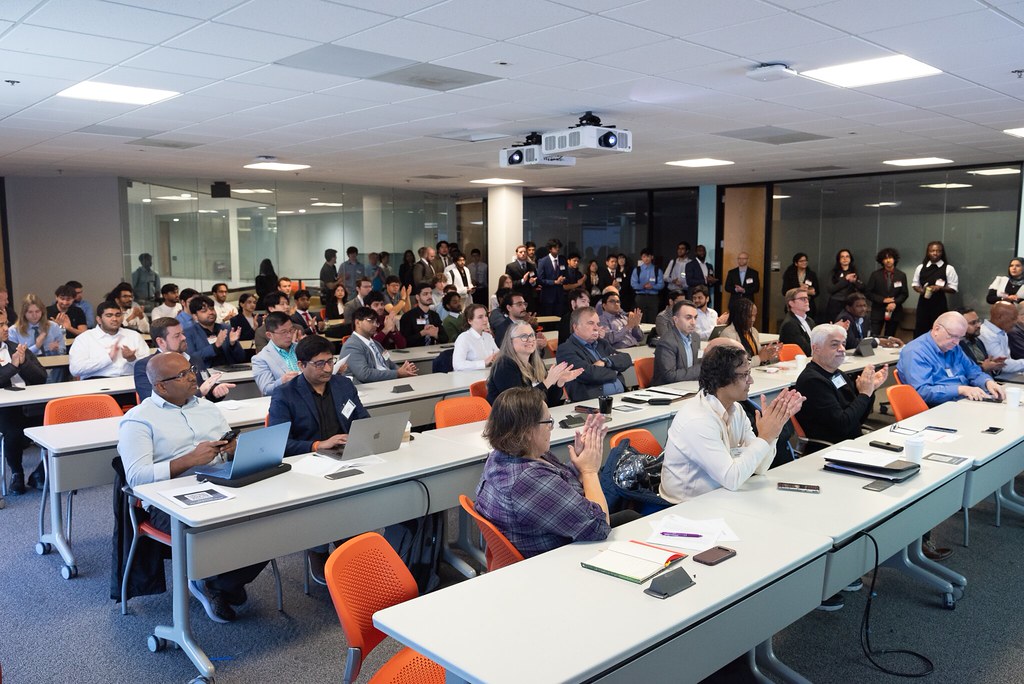
 posted on LinkedIn about the official kick-off for VAIAS and two other ESA Phi-Lab Sweden Edge AI space projects:









 ...what?
